America spent most of 1976 celebrating the Bicentennial with hometown parades, fireworks, and a flood of red, white, and blue merchandise. The Summer Olympics in Montreal gave the country another reason to cheer—especially when Bruce Jenner won the decathlon and instantly became a national hero. At the movies, Rocky reminded audiences that grit, determination, and a stubborn refusal to quit could overcome any obstacle. All of it was a welcome distraction from a tough first half of the decade marked by brutal inflation, Watergate, and stubbornly high unemployment.
In comics, though, the cultural mood didn’t coalesce around a single theme. Instead, the industry splintered in every direction at once. The earlier years of the Bronze Age had been defined by clear movements—the Gothic horror revival, the rise of the anti-hero, the martial-arts boom (See this Index for a full list of years)— but 1976 was different. It wasn’t the year of one movement. It was the year of many. Creators experimented wildly with genre, format, and tone, producing superhero milestones, indie breakthroughs, British imports, oversized treasuries, Spire religious books, and underground comix—often sitting side by side on the same spinner rack.
That eclectic spirit carries directly into the list of the year’s most valuable comics. After the big headliners—X-Men #101, Daredevil #131, Marvel Preview #4—the rankings break wide open into one of the strangest, most unpredictable mixes you’ll ever see in a Bronze Age Top 25. Fast Willie Jackson stands next to Hansi: The Girl Who Loved the Swastika. A self-published Harvey Pekar comic sits beside a Marvel/UK superhero debut. Two Wrightson horror covers hold their own against a Superman/Spider-Man treasury. In 1976, the unusual wasn’t the exception—it was the norm. And the result is a list as fractured, creative, and surprising as the year itself.
- X-Men #101 — $750 for 9.4 raw
1st appearance of Phoenix. Dave Cockrum delivers one of the most explosive covers of the decade as Jean Grey erupts from the water as the Phoenix—a dramatic rebirth that changed the course of X-Men history. Transforming Jean from a side character to a cosmic force. Easily the crown jewel of 1976. - Daredevil #131 — $340 for 9.4 raw
1st appearance of Bullseye. Bullseye’s debut is one of the most important villain introductions of the Bronze Age. His lethal skillset and unhinged personality would become central to Daredevil’s mythology, culminating in classic storylines like Born Again. Netflix’s portrayal of Bullseye by actor Wilson Bethel helped introduce him to the world. - Marvel Preview #4 — $340 for 9.4 raw
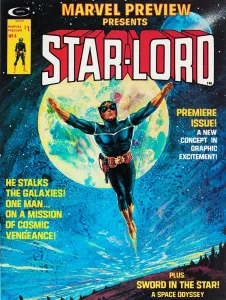
1st appearance of Star-Lord. This black-and-white magazine introduces Peter Quill in a moody sci-fi tale illustrated by Gray Morrow. Look closely at the cover—almost everything is slightly off-center: Quill’s stance, the moon, the horizon. Whether intentional or not, the subtle asymmetry mirrors Star-Lord himself: imperfect and unconventional. - Captain Britain #8 — $280 for 9.4 raw
1st appearance of Betsy Braddock. Before she became Psylocke, before the body swaps and the ninja era, Betsy Braddock debuted here in Marvel UK’s exclusive series. British print runs were smaller and distribution inconsistent, making high-grade copies significantly scarcer than their American counterparts. - Marvel Premiere #28 — $225 for 9.4 raw
1st appearance of the Legion of Monsters.
Ghost Rider, Morbius, Man-Thing, and Werewolf by Night—four of Marvel’s spookiest icons thrown together for the first time. The mash-up is delightfully chaotic and perfectly captures the tail end of Marvel’s early-70s monster craze. A Bronze Age classic with growing collector interest. - All-Star Comics #58 — $215 for 9.4 raw
1st appearance of Power Girl. Kara Zor-L blasts onto the scene in one of DC’s biggest Bronze Age keys. Power Girl brought attitude, confidence, and a fresh energy to the Justice Society revival. The combination of her debut, the All-Star comeback, and the rising value of high-grade 1970s DC books makes this an essential 1976 issue.
- Hansi: The Girl Who Loved the Swastika — $200 for 9.4 raw
Autobiographical comic of Maria Anne Hirschmann. It’s hard to imagine a more jarring cover: a smiling blonde schoolgirl framed by Nazi imagery. Published by Spire Christian Comics, the book tells Hirschmann’s story of indoctrination and eventual escape from the Nazi youth movement. Collectors are drawn to it for the sheer shock value of the cover—one of the most infamous visuals of the Bronze Age. - American Splendor #1 — $200 for 9.4 raw
Harvey Pekar’s underground autobiographical debut. Self-published and printed on low-quality paper, this issue launched Pekar’s lifelong project chronicling the mundane, frustrating, and oddly poetic details of everyday life. A movie by the same name was released in 2003 about this self-proclaimed curmudgeon. Less than 100 copies have ever been graded.
- X-Men #102 — $190 for 9.4 raw
Colossus vs Juggernaut Battle. Kids debated this matchup on playgrounds for years: could Colossus really stand up to the unstoppable Juggernaut? Cockrum and Claremont delivered the definitive answer in this issue, continuing the rising momentum that followed Phoenix’s debut. - Fast Willie Jackson #1 — $180 for 9.4 raw
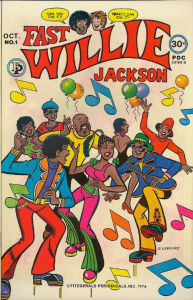
Often referred to as “the black Archie”. One of the earliest and most important Black-led humor comics, Fast Willie Jackson offered a vibrant slice-of-life look at teenage culture from a Black perspective—a rarity in mainstream 1970s comics. Only 135 copies have been graded by CGC, and a mere 11 have reached 9.8, giving this title genuine scarcity and cultural weight. - Fast Willie Jackson #2 — $150 for 9.4 raw
Gus Lemoine cover and interior artwork. Even scarcer than issue #1, this second installment of the groundbreaking Black teen-humor series has only 29 graded copies on the CGC census, with just 6 earning a 9.8. The low distribution, culturally important content, and tiny survival rate make this one of the rarest mainstream-adjacent Bronze Age comics of 1976. - Marvel Spotlight #28 — $150 for 9.4 raw
1st Moon Knight solo story. Before Moon Knight headlined his own comic, before the multiple personalities and Egyptian mythology fully crystallized, he starred here in a gritty solo story that gave readers their first extended look at Marc Spector. A key stepping stone in the development of one of Marvel’s most complex characters. - Captain Britain #1 — $150 for 9.4 raw
1st appearance of Captain Britain. Marvel’s first true attempt at building a hero specifically for the UK market debuted here with Brian Braddock’s origin. As with all Marvel UK titles, limited distribution and fragile paper stock make high-grade copies difficult to secure. - Nova #1 — $140 for 9.4 raw
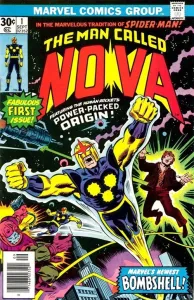
1st appearance of Nova (Richard Rider). Influenced by Silver Age everyman heroes like Peter Parker, Nova burst onto the scene as Marvel’s new teen cosmic adventurer. While he never became a household name in the ’70s, modern fans see this as a major Bronze Age key with steady long-term demand. Fans eagerly await a Nova movie. - Superman vs. The Amazing Spider-Man #1 — $125 for 9.4 raw
100-page Battle of the Century. This massive Treasury Edition united Marvel and DC’s flagship heroes for the first time in a standalone story. At 100 oversized pages for $2.00, it was a genuine event comic—long before “event comics” existed. High-grade copies are notoriously difficult because of the giant format and flimsy binding. - DC Super Stars #11— $100 for 9.4 raw
Zatanna Cover by Gray Morrow. Few memorable Zatanna covers existed prior to the late 1970s, which gives this beautifully illustrated piece by Gray Morrow extra importance. The dramatic pose and wonderful detail make it one of the standout Zatanna images of the Bronze Age. Most of the other covers with Zatanna are weird floating head images of her. - Incredible Hulk #197 — $100 for 9.4 raw
Wrightson cover. If you doubt Bernie Wrightson’s mastery, compare this issue to the Hulk covers that came before and after it. While most artists favored smooth, rounded anatomy, Wrightson carved shadows into muscles, tendons, and veins, giving the Hulk a raw, almost unsettling physicality. The Man-Thing crossover is the perfect pairing for his moody style.
- House of Secrets #139 — $90 for 9.4 raw
Wrightson cover. A scarecrow with a face stitched from human skin. Jack-o’-lanterns carried over a moonlit field. This issue is pure Wrightson—macabre, textured, and dripping with atmosphere. As DC’s horror line sputtered toward cancellation, Wrightson was still producing unforgettable imagery like this.
- Howard the Duck #1— $81 for 9.4 raw
1st issue in own title. Spinning out of Man-Thing and the pages of Giant-Size Man-Thing, Howard’s first ongoing series delivers satire, absurdity, and political parody. The character became a minor pop-culture phenomenon in the mid-80s, making this debut a popular Bronze Age collectible. The Howard the Duck movie was released in 1986.
- Limited Collectors Edition C-44 — $75 for 9.4 raw
Christmas with the Super-Heroes. One of DC’s oversized holiday treasuries, packed with festive stories featuring Superman, Batman, and other iconic heroes. Treasury books are notoriously tough in high grade due to their size. - Eternals #1 — $75 for 9.4 raw
1st appearance of Eternals. Jack Kirby’s cosmic imagination was on full display here as he introduced a race of immortal beings and the godlike Celestials. Values spiked prior to the MCU film but have cooled since, making it a fascinating case study in how movie speculation affects the market. - Peter Parker, The Spectacular Spider-Man #1 — $70 for 9.4 raw
1st new Spider-Man title since 1963. This series gave collectors another choice to explore Peter Parker’s supporting cast and ground-level conflicts. A Bronze Age staple for Spider-Man collectors. - Marvel Treasury Edition #18 — $53 for 9.4 raw
Fantastic Four vs. Dr. Doom. Another oversized Treasury battle, this time pitting Marvel’s First Family against their greatest villain. The huge format gives the artwork a dramatic presence, but it also means surviving 9.4 copies are uncommon.
- Black Goliath #1 — $52 for 9.4 raw
1st appearance of Black Goliath (Bill Foster).Bill Foster finally steps into his own series after years as Hank Pym’s lab partner. Though the run was short-lived, this issue carries significance for fans of Marvel’s expanding roster of Black heroes during the Bronze Age. - 2001: A Space Odyssey #1 — $50 for 9.4 raw
Kirby Treasury Edition. Jack Kirby takes on Kubrick’s masterpiece in a bold, oversized adaptation filled with cosmic grandeur. The Treasury format lets his pencils breathe, and the series would later give birth to Machine Man—making this a cult favorite among Kirby collectors.
1976 was an eclectic year—one in which the nation unified to celebrate the Bicentennial while the comic book world splintered into every genre imaginable. Even the small things reflected this odd diversity: a renowned horror artist like Bernie Wrightson drawing an Incredible Hulk cover, or Howard the Duck—already one of Marvel’s strangest creations—launching his own title. And then there’s Hansi, a comic so visually jarring that its swastika-covered cover still stops collectors in their tracks.
Ironically, some of the actual Bicentennial-themed comics of 1976 aren’t valuable enough to make this list, leaving them outside the spotlight during the very year they were meant to commemorate. But if nothing else, this Top 25 proves just how unpredictable and wide-ranging the Bronze Age had become. In 1976, the unusual wasn’t a rarity—it was the rule.
by Ron Cloer
For a year-by-year list of the most expensive Bronze Age comic books and top Bronze Creators, see the