1973: The Year Comics Came of Age
If 1971 broke the rules and 1972 embraced the dark, 1973 was the year comics grew up.
It was a year of shock, renewal, and transformation — when heroes stumbled, boundaries expanded, and readers witnessed the medium take its boldest step toward the modern age.
In June and July, Marvel published The Amazing Spider-Man #121–122 — two issues that changed everything. Gwen Stacy’s death shattered the illusion of safety that had defined the Silver Age. In that moment, Peter Parker — and his readers — learned that even love could die, and even heroes could fail. The follow-up, the death of the Green Goblin, felt less like victory and more like trauma. It was the end of innocence and the beginning of realism. From this point forward, superhero stories would never be the same.
Yet as one door closed, another opened.
In the same year that tragedy reshaped Spider-Man’s world, new voices and faces began reshaping comics themselves. Within months, readers met Blade (Tomb of Dracula #10), Brother Voodoo (Strange Tales #169), Nubia (Wonder Woman #204), and Killmonger (Jungle Action #6). These weren’t side characters or curiosities — they were headline heroes and villains with depth, identity, and purpose. For the first time, mainstream superhero comics made serious strides toward racial inclusion.
1973 can credibly be called “the year Black characters entered the Bronze Age mainstream.”
At the same time, new genres surged to the forefront. Iron Man #55 launched Jim Starlin’s cosmic odyssey with the debut of Thanos, Special Marvel Edition #15 introduced Shang-Chi amid the martial-arts craze. Horror still thrived in the pages of Ghost Rider and Tomb of Dracula, while sword-and-sorcery reached new heights in Conan the Barbarian.
It was a year that redefined both who could be a hero and what a hero’s story could mean. Here are the most significant and valuable comics from 1973, each one marking a step in that evolution.
1. Iron Man #55 –
1st appearance of Thanos, Drax, Eros (Starfox). Thanos’ appearance is the singularly most important introduction for the Marvel Universe. His presence and mission drove the MCU for a decade. This book has undergone some downward pressure, but it’s still a blue-chip key issue. This is the right time to be a buyer for this issue instead of a seller.
2. Amazing Spider-Man #121 –
Death of Gwen Stacy. A comic that felt more like a punch to the gut than a story. All of those times we related to Peter Parker’s situations or lack of popularity made this issue more personal. We always believed that he could save the day, and when he couldn’t, our innocence died with Stacy. It was a poignant moment in comic history.
3. Amazing Spider-Man #122 –
Death of Green Goblin. Looking at this powerful John Romita Sr. cover, you read the word bubbles and you feel the vitriol swell. Norman intentionally and maliciously stole the life of this beautiful young lady whom Peter loved. After Green Goblin’s death, there is no joy or satisfaction, just more unnecessary pain.
4. Tomb of Dracula #10 –
1st appearance of Blade the Vampire Slayer. This classic introduction became Marvel’s first black horror lead. A character like Blade is essential to any vampire story; there has to be someone to challenge the supernatural killer. This Gil Kane cover captures an impromptu moment with Blade on the stairs and Dracula with his victim, fiercely staring at whoever would interrupt his meal. Iconic cover.
5. FOOM #2 – 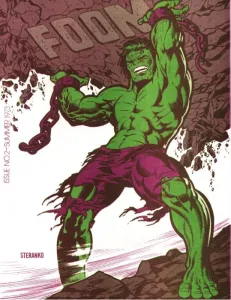
Marvel’s Earliest printed image of Wolverine. Often overlooked but released well before Incredible Hulk 180 or 181. This issue was a fan-club exclusive that deserves all the attention it can get. The Steranko cover is gorgeous with a shackled and ripped Hulk heaving a crumbling boulder over his head. I would put this Steranko Hulk cover in the same category as Captain America #110, which features Hulk chasing Bucky through a wall.
6. Ghost Rider #1 –
1st solo Johnny Blaze series. In 1973, there was a strong movement toward the mystical with Ghost Rider leading the way on a flaming motorcycle. This Gil Kane cover has that rebellious ’70s motorcycle vibe with Ghost Rider bursting through a police barricade while doing a wheelie. Kids in the neighborhood were trying to imitate this move with their banana-seat Schwinn bicycles.
7. Special Marvel Edition #15 –
1st appearance of Shang-Chi. Bruce Lee’s Enter the Dragon was released in August 1973; this issue was on sale September 4th, 1973. (according to the Comic Reader) To say that Marvel’s timing was perfect is an understatement. There was a real Kung-fu craze happening in the early ’70s, and Mighty Marvel wasn’t missing this trend. Jim Starlin’s cover reminds me of Batman 232, featuring a larger green figure with sharp nails behind the action.
8. Batman #251 – 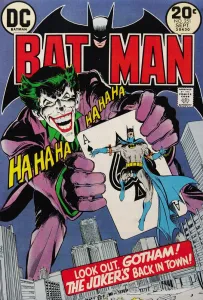
“The Joker’s Five-Way Revenge!” — To understand why this book matters, look at the last Joker cover in Batman, which is issue #186. Joker is a goofy, gag-ridden shell of his diabolical self. Adams & O’Neil returned the Joker to a murderer who would kill for no reason. To me, this is the greatest Adams cover of all time.
9. Strange Tales #169 –
1st appearance of Brother Voodoo. Continuing Marvel’s Mystical Mystery tour with the addition of Brother Voodoo. He is the second black lead character and the second mystical character in this list. John Romita Sr.’s cover is powerful with Haitian-born hero Brother Voodoo walking out of the flames of a fiery car wreck.
10. Shazam! #1 –
Revival of Captain Marvel. After a 20-year gap, Shazam returns with an introduction by Superman. The title has a retro feel that is immediately apparent as C.C. Beck, who worked on Whiz Comics and Captain Marvel in the 1940s, created the cover art for the first nine issues.
11. Wonder Woman #204 –
1st appearance of Nubia. Nubia, as she was originally written, was Queen Hippolyta’s second daughter, making her as strong as Wonder Woman. After four plus years of Wonder Woman wearing jump suits, DC decides that Princess Diana should wear her iconic costume again and not look like one of Charlie’s Angels. Good choice. Nubia’s first appearance and Wonder Woman’s return to greatness make this a book that is collector-worthy.
12. Jungle Action #6 –
1st appearance of Killmonger. This book has seen some elevated and deflated values related to his big screen introduction in 2018’s Black Panther. Regardless, he is an important character in the MCU and in comics. This is the fourth black character introduced in 1973, showing a strong trend toward a more diverse comic community.
13. Conan the Barbarian #23 –
1st appearance of Red Sonja. This is another Gil Kane cover that doesn’t feature Red Sonja and has a misspelling in the upper left corner. Who knew that “Barbarian” was so difficult to spell? Because Red Sonja doesn’t appear on the cover, some collectors choose to buy Conan the Barbarian #24 with a gorgeous Barry Windsor-Smith depiction of Red Sonja.
14. Adventure into Fear #19 –
1st appearance of Howard the Duck. He is unnamed; however, he is identical in appearance to Howard the Duck #1. A duck wearing a hat, suit, and tie while smoking and talking. Once again, Gil Kane was at the drawing board; the guy was very busy in 1973. So much drama in a single cover, Man-Thing is falling off a crumbling facade, a warrior swings a flaming sword over a bikini-clad woman in red boots.
15. Marvel Premiere #10 –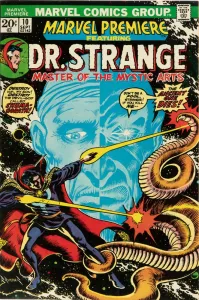
1st appearance of Shuma Gorath. Dr. Strange’s mystical powers are the perfect fit for 1973. He battles a demon called Shuma Gorath with the Ancient One in the balance. Frank Brunner’s artwork is dark and dramatic, matching the tone of the times.
16. Swamp Thing #7 –
Swamp Thing and Batman meet for the 1st time. As the city stretches in the distance, Swamp Thing clings to a building’s ledge as the Dark Knight approaches from below. This is Bernie Wrightson showcasing his immense talent, blending horror and a moody Batman together. Stunning cover.
17. Avengers #113 –
Social commentary issue. In the early 1970s, several suicide bombers took hostages and sometimes killed them. The most infamous were the Bloody Friday bombing in Belfast and the Munich Olympic Massacre in September 1972. This grave story of a hate-filled group called the living bombs mirrors the real world of the time. This issue, along with the two Spider-Man issues above, displays how comic books grew up.
18. Defenders #10 –
Thor vs. The Hulk test of strength cover. With all the serious tones and darker themes, this is the kind of book that kids love. Similar to the Superman vs. The Flash races at DC, this is Marvel’s version: Thor vs Hulk. Who is stronger? You can visit forums and Reddit today and find a similar topic, as we still love to debate.
19. Monster of Frankenstein #1 –
After the Comics Code Authority finally relaxed its rules in 1971, Marvel wasted no time resurrecting the classic monsters that had shaped early horror literature. Monster of Frankenstein #1 is the company’s most faithful attempt at adapting Mary Shelley’s iconic creature, presenting him not as a gimmick or guest villain but as a tragic, fully realized protagonist. Mike Ploog’s atmospheric artwork delivers the perfect gothic tone—moody shadows, torch-lit stonework, and a lumbering creature who looks more sorrowful than savage. This book stands as a reminder that horror wasn’t just a trend—it was becoming a pillar of the Bronze Age.
20. Amazing Spider-Man #124 –
1st appearance of Man-Wolf (J. Jonah Jameson’s son) The man who called Spider-Man a menace has a son who is a menace? Every fan of Spider-Man loves to see J. Jonah Jameson cowering in fear on this fun Romita cover. The horror genre continued to blend with the superhero genre in 1973.
21. Amazing Spider-Man #125 – 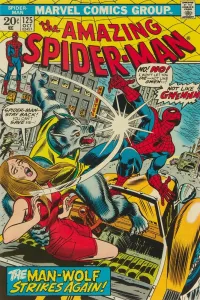
Man-Wolf saga continues. When Spider-Man screams, “I won’t let you die–not like Gwen! not like GWENNNN!”, I feel the pain. Isn’t it too soon to bring this up again? Gwen just passed, and now you’re tormenting us with this cover. John Romita Sr. didn’t show any compassion with this Spider-Man cover.
22. Captain Marvel #26 –
1st cover appearance of Thanos and 2nd full appearance of Thanos. The mastermind reveals himself alongside Death in a splash page on the final page. From this point on Thanos is trying to impress or win over his love, Death, by murdering people. Awww, isn’t that cute?
23. Captain Marvel #27 –
1st full appearance of Eros. Part three in the Thanos war introduces us to Eros, Thanos’ brother. Jim Starlin created this action-filled cover.
24. Captain Marvel #25 –
Starlin’s cosmic Thanos war begins. Before the Thanos Quest of 1990 or the Infinite Gauntlet series of 1991, there was the Thanos War of 1973 and 1974. The Mad Titan has been problematic for a long time.
25. House of Mystery #214 –
Bernie Wrightson Bronze Age horror. After years of little interest, Bronze Age horror books in general and Wrightson books, specifically, are experiencing new popularity.
Looking back, 1973 feels like the year comics stepped out of adolescence.
The innocence of earlier decades was gone, replaced by stories that dared to wound their readers and characters who reflected a broader, truer world. The deaths of Gwen Stacy and the Green Goblin closed one chapter, even as Blade, Brother Voodoo, Nubia, and Killmonger opened another. Horror deepened, mysticism expanded, and cosmic storytelling reached new heights.
These twenty-five comics show a medium in motion — restless, diverse, willing to take chances. If the Bronze Age had been building its foundation since 1970, then 1973 was the year the structure took shape. A year of loss, a year of representation, a year of reinvention.
A year comics finally came of age.
By Ron Cloer
For all the years, see the